Seamless Fall Gingham Papers: Avoid These Common Pitfalls Before You Start Your Project
You have likely spent hours hunting for the perfect autumn aesthetic, only to find digital papers that look pixelated when you zoom in or patterns that don't quite align when you try to print them. This is a frustrating experience for anyone creating scrapbooks, junk journals, or marketing materials. The solution often lies in high-quality Seamless Fall Gingham Papers, but simply buying a pack isn't enough. To get professional results, you need to understand exactly what you are receiving and how to integrate these assets correctly into your workflow.
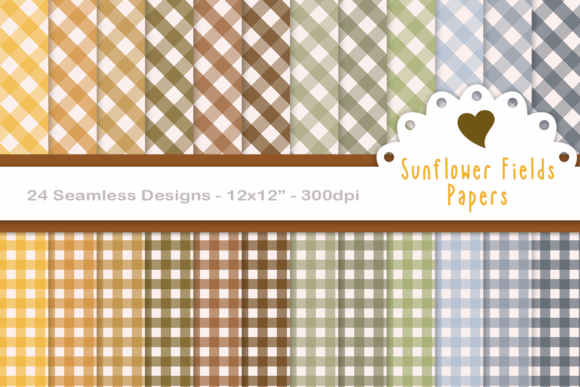
When you purchase a collection of 24 individual papers featuring classic gingham checks in warm fall tones, you aren't just getting images; you are getting a toolkit for consistency. However, many creators make the mistake of assuming all digital paper packs are created equal. Some files are too small for large prints, while others lack the seamless tiling required for sublimation or fabric design. By understanding the technical specifications and common usage errors, you can ensure your projects look polished from the first page to the final product.
Understanding What You Actually Receive
Before you even open the download folder, it is crucial to verify the file specifications. A common error occurs when buyers expect vector files or editable layers when they have actually purchased raster-based PNGs. With this specific set of Seamless Fall Gingham Papers, you are receiving 24 distinct PNG files. While PNG is an excellent format for transparency and crisp edges, it is not a vector format like SVG or EPS. This means you cannot resize them infinitely without losing quality if you push them beyond their native resolution.
The good news is that these papers are designed with a 12×12″ size at 300dpi. This is the industry standard for high-quality printing. If you attempt to use a lower-resolution image for a large banner or a full-page background, the result will be blurry and unprofessional. Conversely, if you treat these 300dpi files as low-res web graphics, you might inadvertently compress them too much during upload, ruining their sharpness. Always check your software settings before placing these images into your designs.
The Importance of Seamless Tiling
The term "seamless" is often used loosely in digital marketplaces, leading to disappointment. A truly seamless pattern repeats perfectly without visible lines or breaks where the tiles meet. If your Seamless Fall Gingham Papers do not tile correctly, your project will look amateurish. This is particularly critical for:
- Scrapbooking: Where backgrounds must cover entire pages without awkward borders.
- Fabric Design: Where the pattern must flow continuously across the material.
- Sublimation: Where the print wraps around cups, mugs, or shirts, requiring a flawless loop.
To avoid mistakes here, always test your pattern by duplicating the layer and moving it horizontally and vertically. If you see a hard line or a gap in the gingham check, the file is not truly seamless. Most reputable sellers provide pre-tested seamless files, but verifying this yourself takes seconds and saves hours of frustration later.
Pitfalls in Application and Usage
Even with high-quality files, the way you apply them can determine the success of your project. One frequent oversight involves color management. Digital screens (RGB) and printers (CMYK) display colors differently. The rich, warm reds and oranges of a fall gingham pattern might appear slightly different on paper than they do on your monitor. If you are designing for a client who requires exact brand matching, relying solely on screen previewing is a risky move.
Advice: Always print a small swatch of your chosen Seamless Fall Gingham Papers on the actual paper stock you intend to use. This allows you to judge the true color saturation and contrast before committing to a full-scale project like a wedding invitation suite or a large batch of party decor.
Another common mistake is ignoring the aspect ratio. While the source files are 12×12 inches, you may want to use them for a vertical flyer or a horizontal header. When you stretch a 1:1 square image to fit a non-square canvas, the gingham squares will turn into rectangles, distorting the pattern's geometry. This distortion looks jarring and cheapens the overall aesthetic.
Better Approaches for Scaling
If you need to adapt these 12×12″ papers for different layouts, consider using the "Crop" or "Fill" functions in your design software rather than stretching. Alternatively, create a new document with the correct dimensions and place multiple instances of the paper side-by-side to fill the space naturally. This preserves the integrity of the gingham check and ensures the pattern remains geometrically accurate.
For entrepreneurs selling physical products, another pitfall is underestimating the file size implications. High-resolution 300dpi PNGs can be large files. Uploading them to slow servers or sharing them via email attachments can lead to compression artifacts. If you are sending these to a print shop, use a cloud storage link or a dedicated transfer service to ensure the files arrive uncompressed and ready for production.
Evaluating Value and Suitability
With 24 individual papers included, the variety is a major selling point, but it can also lead to decision paralysis. Beginners often try to use every single pattern in one project, resulting in a chaotic design that lacks focus. In graphic design, less is often more. A cohesive palette usually involves selecting three to five complementary patterns rather than mixing all available options.
When evaluating whether this pack fits your needs, consider your specific craft goals. Are you making digital planners? The 300dpi resolution is perfect for screen viewing and PDF exports. Are you creating physical junk journals? The seamless nature ensures your page spreads look continuous. Are you a marketer running ads? These fall-themed patterns offer seasonal relevance that boosts engagement during autumn months.
However, be cautious about licensing. Just because you own the files doesn't mean you can resell them as digital goods themselves. Always review the terms of use associated with your Seamless Fall Gingham Papers. Most licenses allow for personal and commercial use in finished physical products, such as printed greeting cards or t-shirts, but prohibit selling the raw digital files to others. Violating these terms can lead to legal issues and account bans on marketplaces.
Maximizing Efficiency in Your Workflow
To truly leverage these resources, organize your library effectively. Create a dedicated folder named "Fall Gingham Collection" and sort the 24 PNGs by color intensity or pattern density. This simple organizational step saves time when you are rushing to meet a deadline. Instead of scrolling through hundreds of random files, you can quickly locate the specific shade of orange or plaid needed for your current layout.
Furthermore, take advantage of the versatility of PNG files. Because they support transparency, you can layer these gingham papers over textured backgrounds, photos, or other elements to create depth. Don't just use them as flat backgrounds; experiment with blending modes like "Multiply" or "Overlay" to integrate them seamlessly with other design elements. This technique adds a professional touch that separates hobbyist work from expert-level design.
By paying attention to file formats, testing for seamless tiling, managing color expectations, and respecting licensing agreements, you transform a simple download into a powerful asset. Whether you are a blogger looking to refresh your site's autumn theme, a small business owner preparing holiday inventory, or an educator creating classroom materials, understanding the nuances of Seamless Fall Gingham Papers ensures your final output is nothing short of exceptional. Avoid the shortcuts that compromise quality, and let these high-resolution, professionally crafted patterns elevate your creative projects.