White Opal Texture Digital Paper: A Comprehensive Evaluation
In the landscape of digital design resources, texture plays a pivotal role in adding depth and authenticity to visual compositions. Among the various options available, White Opal Texture Digital Paper has emerged as a specific asset for creators seeking a refined, natural aesthetic without the harshness of stark white backgrounds. This evaluation explores the technical specifications, practical applications, and strategic considerations associated with this particular set of digital assets, helping designers determine if it aligns with their project requirements.
Understanding the Product Specifications
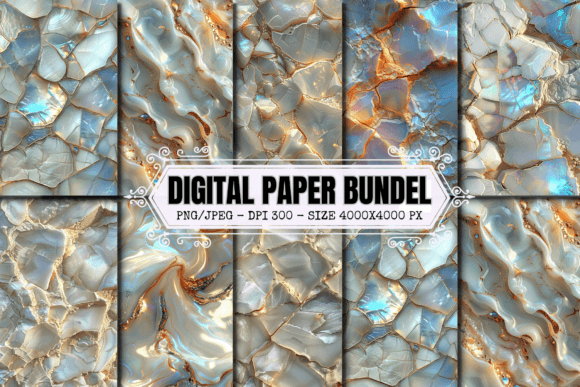
To make an informed decision, one must first examine the tangible attributes of the product. The pack consists of 8 distinct JPG and PNG files, each representing a unique variation of the opal texture. These patterns are not seamless; rather, they function as individual, high-resolution textures that can be applied to specific areas or used as full-page backgrounds depending on the layout needs.
The technical quality is defined by a resolution of 4000 x 4000 pixels at 300 dpi. This specification is critical for several reasons. First, the 300 dpi standard ensures that the images are print-ready, meaning they will maintain sharpness and clarity when scaled down for physical media like business cards or up-scaled for large format prints. Second, the square aspect ratio offers versatility, allowing for easy cropping or resizing while maintaining the integrity of the texture's grain.
Primary Applications and Use Cases
The versatility of these digital papers stems from their neutral yet textured nature. They serve as a foundational element in a wide array of creative endeavors. Below are the primary sectors where this resource provides significant value:
- Wall Art and Printable Designs: The subtle variations in the white opal texture make it ideal for creating sophisticated wall art. It can serve as a background for typography-based posters or stand alone as an abstract piece that mimics the look of high-quality stationery or canvas.
- Crafting and Cutting Machines: For users of Silhouette Cameo or Cricut machines, these patterns are excellent for designing intricate cut files. The high resolution ensures that even small details remain crisp when transferred to vinyl, cardstock, or heat transfer material.
- Print-on-Demand (POD) Products: In the realm of POD, differentiation is key. Applying this texture to T-shirts, fabric designs, phone cases, and homeware items adds a tactile feel to digital mockups. It elevates basic products by suggesting a premium material finish.
- Digital Branding and Web Design: Website banners, social media graphics, and company branding materials often suffer from looking too flat. Incorporating White Opal Texture Digital Paper introduces organic movement and light reflection, making digital interfaces feel more inviting and less sterile.
- Stationery and Planners: The aesthetic is particularly well-suited for notebooks, planners, and organizational tools. The non-seamless nature allows designers to create focal points within a layout, using the texture to frame text or highlight specific sections.
Benefits and Strategic Advantages
One of the most compelling arguments for selecting this specific digital paper pack is its balance between neutrality and character. Pure white backgrounds can sometimes appear clinical or washed out, while heavily patterned papers can distract from the primary content. White Opal Texture Digital Paper occupies a middle ground, offering the brightness of white with the visual interest of natural stone or paper grain.
The inclusion of both JPG and PNG formats further enhances its utility. While JPG is efficient for web use and general printing, the PNG version likely retains transparency or higher color fidelity, which is essential for overlaying elements without losing detail. Having eight different variations within a single pack allows for consistency across a brand while providing enough variety to prevent monotony in a larger project suite.
Considerations and Potential Tradeoffs
While the product offers numerous advantages, potential users should be aware of specific limitations before purchasing. The most notable constraint is that the patterns are NOT seamless. This characteristic dictates how the texture can be utilized. If a designer requires a repeating background tile that covers an entire surface without visible edges, this pack may not be suitable without additional editing software to stitch the images together.
Furthermore, because the textures are fixed at 4000x4000 pixels, they are raster-based. Unlike vector graphics, scaling these images beyond their original dimensions or attempting to edit specific geometric elements within the texture is not possible without degrading quality. Users needing infinite scalability for logos or icons should consider vector alternatives instead.
Situational Fit: When to Choose This Resource
This digital paper set represents a strong fit for projects where realism and tactility are prioritized over geometric precision. It is particularly effective for:
- Mockup Creation: Creating realistic presentations for clients who need to visualize how a design looks on a physical object.
- Minimalist Aesthetics: Projects that rely on negative space but require a slight deviation from pure white to avoid eye strain or visual boredom.
- Quick Turnaround Projects: Since the files are ready-to-use and do not require complex manipulation to achieve a textured look, they save time in the production workflow.
When Alternatives May Be Preferred
Conversely, there are scenarios where this specific pack might not be the optimal choice. If a project demands a perfectly uniform background for video compositing, a solid color or a seamless gradient might be more appropriate. Similarly, if the goal is to create a pattern that repeats infinitely across a large banner without any visible seams, a dedicated seamless texture pack would be a superior investment.
Additionally, for highly specialized industrial design work requiring precise color matching (such as Pantone-specific branding), the organic nature of a "opal" texture might introduce unwanted color variances that conflict with strict brand guidelines. In such cases, solid colors or controlled gradients offer better compliance.
Decision-Making Insights
Ultimately, the decision to utilize White Opal Texture Digital Paper depends on the specific goals of the project. Creators should ask themselves if they need a background that feels organic and premium or one that is strictly functional and repetitive. The high resolution and dual-format availability suggest a product designed for professional output, making it a worthwhile addition to a library for those engaged in print media, crafting, or high-end digital design.
By understanding the non-seamless nature of the files and leveraging their high DPI capabilities, designers can effectively integrate these textures to enhance visual storytelling. Whether used for a simple social media graphic or a complex POD product line, this resource offers a versatile foundation for elevating the perceived quality of digital and physical outputs.